Powered By Blogger

Tuesday, March 5, 2024

The Good Old Days--maybe...


Available in print and e-book
i-tunes, Amazon, Kobo, Smashwords and Barnes & Noble


More memory lane writing for February, a month I get used to skipping, because the obligation only comes around every four years. Recently, I completed my 79th trip around Our Local Star. So it happens that many of my elder friends spend a lot of time wishing they were 50-60 years younger. 

Sorry to say, but contrary to a lot of what my same-age friends seem to remember, youth wasn't all Golden Days. 

Here's a case in point, a memory I have of a now mostly forgotten blizzard which happened in Massachusetts in February in 1969. This was a year in which my husband had graduated from college but instead of entering the work world, we'd fallen for the siren song of those days and dropped out. He was working in a leather shop for a pittance and I was working a few days a week as a nurse's aide in a small hospital about an hour's commute away. 

We lived in a cabin in the woods near the Quabbin reservoir, which, in those days, was pretty empty of people, although there were a lot of deer, rabbits and raccoons. We had 1930's indoor plumbing, a woodstove and a kerosene heater, which made the house a lot more "modern" than others in the area.  

Other college friends had migrated to the big city of Boston (and vicinity) and were working 9-5 jobs. Sometimes we went in to visit them over weekends. On this particular Sunday, we left late, around 12, I think. It was snowing--but in those days that was not unusual or even a subject of much concern. A big storm was said to be coming in, but we knew the drive back to western Massachusetts well. It was two and half hours, give or take, to dirt road that led to our little house. 

We piled into the car. Our son, then 3 years old, was crying at leaving his same age friend and heading back to the no-kids world of the country. My husband took the wheel, I sat beside him, and we all headed out. First, we'd have to travel north on the 128 beltway before intersecting the secondary road which would take us much of the way across the state to our cabin in the woods. At once the wind picked up, blowing mightily. 


About 4 weeks later, the bump was revealed to be:


Snow blasted down. It was crystalline, and began drifting across the road, making it hard to see. If you remember old Beetle windshield wipers, you understand they were having a hard time keeping up, so now and then it was hard to see. The traffic, always heavy on the beltway, began to slow. The big cars nearby began to skid and wobble, struggling to maintain their lanes, lanes which were rapidly becoming little but the tracks of vehicle ahead of you. 

It was quickly becoming apparent that we weren't going to escape Boston. On every side, people were heading for the exits. Trucks fishtailed and then jack-knifed, but, intrepid Beetle drivers that we were, we maneuvered around them. Still, anxiety increased every moment because there we were in the middle of it--Daddy, Mommy and little boy, all within this German eggshell. And, oh, yes, I haven't mentioned it yet, but I was eight months pregnant. We were beginning to get cold too. It was the old VW tale about the single heating vent burning up the driver's left foot, while icicles formed on the passengers. 

The wind was howling, pushing the trucks. The wipers were no longer keeping up. Nothing to see but blowing snow and red tail lights as ahead, people braked for obstacles we couldn't see. Finally, my husband saw a familiar exit, the way to his parent's house in Lexington. This was problematic, as we currently weren't on good terms. Still, it seemed the only choice. We dove into the exit.

Now there was another problem--drifts were clogging the ramp. The plows, always diligent in these populated areas, couldn't keep up. Cars ahead were getting stuckwhile trying to exit the exit! The heavy cars of those days wallowed and skidded. People were getting out of their cars in that whipping wind, hoping to push themselves free. The little V-Dub became bogged down too. 

"Get out and push!" my husband yelled. So there I was, in my full-length dress, high boots and big belly, scarf tightly wrapped around my head, pushing the car. When he found traction and surged ahead, I fell flat on my face into the snow. He managed to maneuver around the stalled cars higher on the ramp, until he encountered the penultimate drift. His forward progress came to a halt.

I trudged back to the car amid wind and blinding white, shivering from the snow still stuck to my bare legs. When I arrived, he jumped out, cried, "You drive  now!" There had been only one car ahead of us, but they were making slow forward progress toward the main road. No waiting there! You just had to merge and pray the crawling cars saw you coming. 

So through that final, high drift, with me on and off the clutch, rocking the car, and with him pushing, we broke free and reached the road. He wore his prized, very cool hat, an old fedora--but this blew off, and was last seen sailing above 128 into a wall of white. 


Now at the top, we paused, changed drivers, and went the final few miles to safety, starting and stopping and negotiating our way through intersections where the lights were not working, and past many, many disabled, abandoned vehicles.

No cell phones in those days, so there were, on the steps of the Lexington house, where. blessedly, the door opened to us. Once inside, I had one of those false labor episodes, which are rather painful. I remember my mother-in-law calling a pediatrician who lived close by, who said he would make his way over if this didn't resolve, but, of course, once I was warm and had changed my clothes, it eventually went away.    

We were in that house for three days, because that's how long it took for all the abandoned vehicles to be cleared from the exit/entrances. Our son was happy to be at his grandparents because there were two teen Aunts to play with him, although, naturally, the elders were definitely ready for us to leave by the time we did. Driving around on the second day, hoping to find an opening, we'd passed by " our" exit, and seen the grill of the car that had been behind us, nearly buried under a monster drift that completely had encased it. 

When we reached home, we were delighted that our dirt road had been cleared. My husband forced the car into the drift at our driveway, and then we half-swam half-crawled our way over chest-high snow to the house, towing our little boy and a suitcase. The cats were glad to see us, as their kibble had long since run out and the house was darn cold. The old kerosene "furnace," by itself, kept the place in the vicinity of 45 degrees, so the plumbing hadn't frozen. With a fire started in the wood stove in time we were warm again.

~Juliet Waldron

Originally posted at:

https://bwlauthors.blogspot.com/2024/02/those-were-days-maybe.html


Wednesday, May 27, 2020

Why Watch Weather?

Trout Lilies

I'm a weather junkie. Unfortunately, we're in the streaming world now, and I've lost contact with my favorite zone-out fix, The Weather Channel. I must not be the only one so afflicted, though, because Weather Channel has had a long and successful run on TV and has become a go-to in apps and on the net.

I had the thought the other day, that while there are a lot of weather watchers today, most folks, most of the time in their American indoor lives, are barely affected by weather conditions at all. They just turn up the heat when they are cold and turn on the a/c when they are hot and don't particularly worry about it. If the apple blossoms are frozen here, they'll just ship our apples in from somewhere else.

Now, I've lived in hot places without a/c, and that wasn't much fun, especially as the place where I endured this was both noisy and hot. You couldn't open a window to catch a pleasant breeze for fear of being deafened, or, at least, of drowning out the TV you'd turned to full volume in an attempt to ignore the racket outside. During those summers you better believe I paid close attention to the forecast.

If you consider it, as long as you aren't living in a Third World mud hovel and earning your daily bread by farming, weather doesn't seem much to worry about. Many Americans go from homes to garages to cars to garages and then jobs and never have to brave the elements at all. Despite this, I think a lot of humans remain fascinated by weather, even if the life and death day-to-day consequences have been so smoothed over for many of us.


Central PA floods

The caveat is that the weather is changing--the world over. Maybe it's a good thing that no matter how sheltered an American suburbanite's life is, some of us, need to or not, are still paying (nerdy) attention to what's going on out there in the big world.

After all, Bad weather events--hurricanes, floods, droughts, fires--are Important Clues as to how our Mama is Feeling.

And we all should know by now that If Mama Ain't Happy, Ain't Nobody Happy. 


~~Juliet Waldron
Historical Novels
https://bookswelove.net/waldron-juliet/


Monday, May 25, 2020

New Moon, Possum Waddles Forth


The 1% always makes sure there is a myth surrounding them. Their entitlements and privileges are justifiable--God Given--of course they are!

It used to be the Divine Right of Kings, but here in America our Supine Court (Supreme Court, you say? When was that?) has brought us into an era of The Divine Right of Corporations. 

As always, there's well-armed police to enforce the rules upon peasants, like upon people whose property is "in the way" of an oil or gas pipeline. Oh, you say, those are not people, those are Indians and who gives a f**k about some old treaty! Pipelines and gas wells poison white people, ruin their farms and kill their dairy cattle, too, you know. Just look it up.

Don't think you are a peasant? Check out what Jeff Bezos makes an hour and then feel free to change your mind.  Per hour, he makes a whopping $8,961,187, roughly 315 times Amazon's $28,466 median annual worker pay.

Well, okay, maybe you don't feel like a peasant. You have an RV and two houses. Okay.

I'll grant you are not a peasant, but only if you also have a Yacht moored in Monte Carlo named "Chapter 11" and a bodacious boat babe or two to go with it. 

IF you are one of Corporations' Chosen Ones, you are probably not reading this blog. 


~~Juliet Waldron
Random daily thoughts from Possum

Wednesday, September 4, 2019

Alexander Hamilton's "Hurricane Letter"


Viewing clips of Dorian's destruction of the Bahamas, with 48 hours of pounding winds and storm surges, I remembered Alexander Hamilton's experience on St. Croix. He, aged 16-17, survived what must have been an extremely violent hurricane.


Christiansted, September 6, 1772
From the Royal Danish American Gazette—
By Alexander Hamilton

“I take up my pen to give you an imperfect account of one of the most dreadful Hurricanes that memory or any records whatever can trace, which happened here on the 31st of August at night. It began about dusk, at North, and raged very violently till ten o’clock. Then ensued a sudden and unexpected interval, which lasted about an hour. Meanwhile the wind was shifting round to the South West point, from whence it returned with redoubled fury and continued so ’till near three o’clock in the morning.

Good God! What horror and destruction! It is impossible for me to describe or you to form any idea of it. It seemed as if a total dissolution of nature was taking place. The roaring of the sea and wind, fiery meteors flying about it in the air, the prodigious glare of almost perpetual lightning, the crash of falling houses, and the ear-piercing shrieks of the distressed, were sufficient to strike astonishment into Angels.


A great part of the buildings throughout the Island are levelled to the ground, almost all the rest very shattered; several persons killed and numbers utterly ruined; whole families running about the streets, unknowing where to find a place of shelter; the sick exposed to the keenness of water and air without a bed to lie upon, or a dry covering to their bodies; and our harbours entirely bare….”


This is just sample of what was a much longer piece of teen prose, one which may have propelled this young literary up-and-comer out of the West Indies. The remainder of his discourse is as full of allusions to an All-merciful and/or All-punishing God as any 18th Century churchgoer might wish. Sometimes, however, unvarnished truth breaks through the flow of his pious public sentiments:

"But alas! how different, how deplorable—how gloomy the prospect—death comes rushing on in triumph veiled in a mantle of ten-fold darkness. His unrelenting scythe, pointed and ready for the stroke.—On his right hand sits destruction, hurling the winds and belching forth flames;—calamity on his left threatening famine, disease, distress of all kinds.—And Oh! thou wretch, look
still a little further; see the gulf of eternal mystery open—there mayest thou shortly plunge — ...

Hark! ruin and confusion on every side.—Tis thy turn next: but one short moment—even now—Oh Lord help—Jesus be merciful! 


Thus did I reflect, and thus at every gust of the wind did I conclude,—till it pleased the Almighty to allay..."


Alexander had been waiting to die; he now thanked God that he'd escaped.  At the end of the essay, he went a step further in his Christianity. He wrote an impassioned plea to his wealthy readers to help their less fortunate neighbors, the many who now had lost everything.

"—Look around thee and shudder at the view.—See desolation and ruin wherever thou turnest thine eye. See thy fellow-creatures pale and lifeless; their bodies mangled—their souls snatched into eternity—
...Oh ye, who revel in affluence, see the afflictions of humanity, and bestow your superfluity to ease them.—Say not, we have suffered also, and with-hold your compassion. What are your sufferings compared to these? Ye have still more than enough left.—Act wisely.—Succour the miserable and lay up a treasure in Heaven."

Hamilton, I think, truly wanted people to do the right thing, and he wasn't afraid to give men three times his age a lesson in scripture. It's an aspect of his personality that is endearingly boyish.


All I have is words, but for me they shall be a magical buckler and sheathe!


Juliet Waldron


Friday, February 8, 2019

The Incredible Everywhere-ness of My Gray Hair


My hair is long and gray and getting scraggly. (Weird to be physically falling apart, in a losing battle with entropy, but that's the way it is for me this year.) Sometimes my long hair still looks cool, but it's really getting tatty at the ends and has to be clipped constantly. 

Mostly, though, my hair is in the way. I'm losing the energy to put it up, to braid it, to do anything with it. Of course, I'm also in a spell where it's tough to get up the morning, but that probably has to do more with politics than with my actual physical state. Once upon a time I looked like this, a collegiate Mommy in an apartment with a black high gloss floor, a handsome young motor-cycle riding husband,a toddler and a host of neato posters:


and now it's like this, at Dragon Con, trying on a dragon's tail I didn't quite buy.


These days, my gray hair is caught in my vacuum nozzles, wrapped round around the little wheels of the machine, choking the wands, so that once a job (at least) I have to disassemble the thing and peer into the tubes to see if a clog is impacting the once forceful suckage of the my little Mighty Mite sweeper. If it is, then it needs to be poked out with long brushes, the kind used to clean furnaces.

Hair is threaded into the weave of my doormats, so that to clean them, I have to not only sweep and shake, but pick them by hand, unwinding and knotting for disposal those long gray strands. Hair is in the brush every day in ever increasing amounts. I even find it--pardon me for going here--in the cat poop that I lift from the boxes. It's distressing to be losing so much of it, really it is, after years of taking the bounty for granted.


Once again, I want to cut it, a process I constantly go through, growing it out and then cutting it off. 


Cut it--and look in the mirror and lament--WHY DID I DO THAT? 


And begin to grow it out again. If it will grow, in the winding down of my physical form...


Peace--


Juliet 

See all my historical novels:

https://www.julietwaldron.com


Thursday, July 5, 2018

How Dystopian S/F became Our Current Reality


We’re like 18th Century aristocrats, all of us in the West. We sit and lounge while communicating with one another at lightning speed, like insects twittering to one another inside some over-burdened global hive.  Perhaps the trip to a Matrix destiny, that proposed end game of our “civilization,” is a lot closer than we think.

I'm sitting at an old CPU, practically a dinosaur, typing on a miraculous late 1980's IBM keyboard. It's indicative of my age, annual income and education that I treasure this antique. It has a marvelous decisive finger touch that this old style typist appreciates. 

However, the world has passed me by. Now babies clutch tiny devices in their fat dimpled fists. Their little faces, which used to shine while they discovered the world, are now are intent and passive. We are being readied for our place inside Some Thing's great machine, just as s/f  writers, our Cassandras and prophets, from PKD to Silverberg to Octavia Butler--and many others beside, who I have yet to read.

*

The Overlords must need a lot of us, perhaps for the now well-known flesh-as-battery option. They have set their "sacred" minions to declare that sex-- one behavior we monkey/people naturally have a gift for--is Evil. Of course, to the monkey mind, these days also bent and shaped by our creation of language as in the Medium is the Message--it is at once inevitable that therefore "evil sex" must occur as often as possible. Our governments seem to believe that sex occurs only for the procreation, though any self-respecting teen will tell you this is patently ridiculous.

 All methods to prevent over-population and consequent destruction of our species' range (now this entire planet) -are strictly forbidden by various "religious" authorities. Let's face it--an oversupply of anything in our current Capitalist system leads to low valuation. Therefore this insane directive to increase and multiply is nothing less than a "Majority Church/State Sanctioned" breeding program for slaves. 

Human lives clearly mean less and less and less to the 1%, our corporate masters who have just about successfully concluded their game of Planetary Monopoly. The "excess population" (per Scrooge) is doomed to become either Soylent Green or just old-fashioned cannon fodder--when there are 9 billion of us, who in charge will give a rat's ass when a million give or take are killed in some unnecessary but rah-rah-team-fight church and/or racist final solution? Take a look at how quickly and completely the westernized Middle East collapsed under the weight of sectarian conflict and a few rapacious, murderously inclined dictators!

Mother Kali will be dancing soon, I fear. I just hope she can clear out some of our major demonic evil-doers, along with the inevitable "collateral damage." I can only pray that our beautiful Mother Earth will survive our bad behavior.


Friday, May 11, 2018

The "Summer Collection"


A 1950's Canadian Indian Residential School story: 


Now it’s May again, and the possum has fully awakened.  Of course, it doesn’t just gradually become spring these days—no! That would be old fashioned; it would be what we've grown to expect after the last 70 years. Instead, we have had a long dry chill here where I live in the literal rump of the NE, followed by 90 degree weather for a few breathless days, causing the everyone, including the cat, to suffer from pollen allergies. Next, it falls back into something like the kind of May oldsters like myself remember: a bit gray, a bit sunny, puffy cumuli that might turn into a sullen deck over the apple blossoms , and a distinct pleasant chill whenever the wind blows.


The result is that I have to start changing my winter clothes collection for my “summer collection.” We’re not talking Turner Classic movies or million bucks athletic garb at this house; I’m speaking with tongue firmly-in-cheek. 

What that graceful word “collection” actually means to me is putting my light colored t-shirts, capris and shorts in the drawers in place of the heavier, darker heavier tees and turtlenecks which have occupied them all winter.
  
It involves lifting heavy plastic tubs full of shirts in/out of tiny spaces in badly aligned closets, maneuvers that require me to bend and lift and twist.  Either that or getting down on the floor to retrieve a low flat box from under the bed. And we all know the fun of getting up on two legs after we've had to get down on all fours, we who are now in their "Golden Years."

 Willy-Yum watches the human bang, crash and clamber from a safe distance--the hall rug. Here, he settles in, big front paws tucked inward against his chest.

After wiping the dust from the lids, I open the tubs. Inside, there they are, the tees I put away at the end of October last year. 


It’s an ever growing collection, I fear, because I have become attached to each and every one, carefully chosen as they were from catalogs or from artsy websites. There are dinosaur tees, one with Eco-slogans, Wheels of the Year, Calaveras, cats, famous movies, and other famous types, from Alex and Eliza Hamilton and Wolf Mozart and his Stanzi as well as  the many faces of Dr. Who. It’s my down-market version of sartorial elegance, suitable either for bike riding, grocery store, yard work or the gym.


When the task is completed, we’ve got the Possum Perfect summer wardrobe (or is it weird-robe?)   packed into the chest of drawers. I’m all ready now for all the heat and humidity now relentlessly on its way.


~Juliet Waldron

Click on the links for:


Sunday, March 11, 2018

REVIEW OF FLY AWAY, SNOW GOOSE (five stars) By Ann Birch


I have read many books about the Indian residential schools, but this one is undoubtedly one of the best. Its main character is a spirited young girl named Yaot’l Snow Goose who lives a happy life in the forests and lakes of the Canadian North West until, on a visit with her family to Yellowknife to trade furs, she is seized by force and taken far away to Fort Providence to the Sacred Heart Residential School. At the same time, her boyfriend Sascho Lynx is also captured. The novel depicts their journey from innocence to despair to hope and happiness as they manage to escape from the horrors of the school and find their way back to their families and freedom.

Though the plot may sound familiar to readers, this one contains a number of surprises. Its authors, Juliet Waldron and John Wisdomkeeper, present their extensive research within vivid scenes that will linger forever in readers’ minds. For example, I cannot think of any other book that shows the cruelty of these schools better than the writers’ depiction of the hair-cutting that takes place as soon as the Indian children enter the institution.  Yaot’l waits, watching the youngsters’ hair being ruthlessly chopped off and knowing that when her turn comes, she must stand up to the enemy. When she bites one of the nuns, she is put into solitary confinement for weeks, a punishment that Waldron and Wisdomkeeper describe in harrowing detail. As Yaot’l looks out of the tiny window of her prison she sees a flock of snow geese flying south. “My own feathered family,” she thinks, “strong and free.” And then she collapses, thinking that she may never again be part of this happy band.

Her ensuing life at the school contains other horrors as well. But along with their description of the usual physical and sexual abuses, the writers offer some surprises. Many of the Indians from warring bands learn to forget their battles as they confront the priests and nuns. Not everyone associated with the institution is a monster—in fact it’s a Métis trader who uses his affiliation with the school to help Yaot’l and Sascho escape—and some of the worst bullying that Yaot’l endures comes not from the nuns but from a small coterie of Indian girls who seek praise for their cruelty from the Catholic hierarchy.

The most memorable scenes in the novel are perhaps those describing the escape of Yaot’l, Sascho, and two younger children and the suspenseful events of their long trek back to their families. As she huddles under tarpaulin in the escape boat, Yaot’l, whose name translates to Warrior, acknowledges her terror and wonders if she is no longer a warrior but merely a rabbit. Gradually, however, she regains her courage. The trader who helps the children escape returns to Yaot’l the precious knife on which her brother Charlie has carved a snow goose. At about the same time, she sees a flock of snow geese returning to their northern habitat and she knows for certain then that she will succeed in her struggles. The trader tells her and her friends, “You four are Indians again.”

It’s a lovely book from start to finish. I learned so much about the culture of these North-Western First Nation bands: their religion, their stories, their connection with the land. Most of all, I travelled with Yaot’l and Sascho on their metaphysical journey through the conflicts of life. It’s the very archetype of the journey that many of us must take in order to survive in a difficult world.

~~~~~~~~~~~~~~~~~~~

Many thanks to Ann Birch for her wonderful review of Fly Away Snow Goose!

~~Juliet Waldron

http://www.julietwaldron.com


Monday, February 26, 2018

Possum Views Vultures


Books We Love Book Club: This month's free book:
Victorian German Pennsylvania
She was a mail order Bride

https://www.facebook.com/groups/153824114796417/

*********************************************************************************

Happy sunshine a week or so ago...and who should I see, sitting in an otherwise empty field, but three enormous turkey buzzards standing on the ground, backs to the sun, wings stretched out so big, so long, the pinfeathers all poking out with its pale trim! They were apparently catching some back-warming rays after a long cold spell, all peacefully facing north, unconcerned about the highway beyond.

Cars racing about, as they do every day, none of the occupants paying any attention at all to the sight of these huge birds who are, for once, at rest, not performing their endless spirals on updrafts, not searching for the smell of death, the scent that signifies a nearby vulture meal.
                                                          "Glorious Battle"


Reality = Not so much


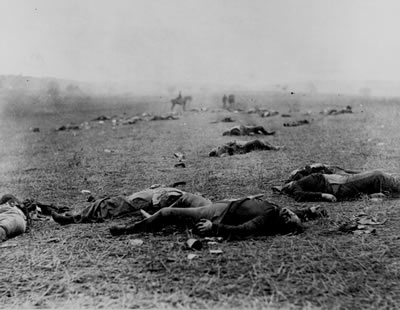
We have a lot of turkey vultures in this valley, more than anywhere else I've ever lived. When we went to Gettysburg, many years ago, the guide  the crowd on the walking tour spun quite a tale. It was about the hoards of vultures who came after the battle, crowding in huge, never-before seen flocks to feast upon the dead, both animals and men. Believable, as vultures have amazing olfactory abilities. I'd imagine they also communicate, group to group, in some way.

"Hey Eddie! I hear there's big doin's down the valley. A reg'lar banquet! Folks flyin' in from everywhere! 'Nuff for ever'body!*"

"Thought I smelt somethin' tasty on that hot wind blowin' up from the south. Let's spiral up this here thermal and go check 'er out!"


Our guide, after allowing us to savor that creepy fact for a few minutes, then went on to add that this was the reason why there were still so many turkey vultures in the area, even now, 150+ years after the mad-house convulsion of slaughter that was the Battle of Gettysburg. 

This left me metaphorically scratching my head. What do these still persistent armies of scavengers live on during the long generations since the marvelous three days of the legendary banquet? Do the vultures hang out with their young, telling and retelling their nestlings about the "thrilling days of yesteryear," as they dream of another episode of The Big Kill?  

Cathartes Aura is their (poetic, I think) Latin designation, which means Cleansing Wind. You might be interested to learn that a group of vultures on the ground are called a "committee" and as I ponder some committees I've watched in action--especially lately in our Senate--I think the name is apt. In flight, a group of vultures is called a "kettle." On the ground, at supper with a host of family and friends, they are--wait for it!--called a "wake."  


~~Juliet Waldron


See all my historical novels, at Books We Love, KOBO, Barnes & Noble & Amazon


https://www.facebook.com/jwhistfic/?ref=aymt_homepage_panel


* with apologies to Cheech and Chong

Saturday, February 3, 2018

Ground Hog Day Mea Culpa


The lambs are born now in the cold and snow. The days begin to lengthen. Light candles for Her, Mother Earth is tilting us in the northern hemisphere toward  the sun once again.  


It's cold as hell today--not so much the temperature, but the wind chill, a howl out of the west. The birds motor through my offerings of black oil sunflower seed and I had to go outside with wet hair to refill their feeders and scatter more on the ground. 

The squirrels are (mostly) in hiding today, but another tree is being taken down in the neighborhood, and that's not good for the local wildlife. I'm still guilty as hell about the big silver maple we cut in autumn, as the wreckage of furry and feathered lives was visible (and audible, with squirrel on squirrel violence) all around. Precious housing units were abruptly gone and there were bloody fights over what remained. Humans don't realize what we do when we cut a tree--all that food, all that shelter, all that flood control--is instantly lost.


We worried that the dead branches that this kind of tree produces continually--silver maples of any age seem to be constantly in a state of semi-decay, with debris-filled holes and marching ants--would land on our roof or solar panels.  It's the second tree we've cut in the 30+ years we've lived here, but still it felt as if a giant hole had been punched in the canopy of green life with which we've surrounded ourselves. We love the trees and all that co-exists in their sheltering arms, so this removal was a tough decision.


Juliet Waldron


See all my historical novels here:


Saturday, October 14, 2017

Two Old Wimmen go to see NORMA


My friend and I went to the movies to see Met @ The Movies first offering of the season NORMA by Bellini. My friend went to NYC sixty years ago to be an actress. She was an actress, too, and has terrific stories about performers like and then taught in city schools, because that's often the way "careers" in the Arts go--your chosen professional becomes a hobby, or you starve. She's verbal, sophisticated, and she Got Experience, as we were all instructed to do we young adults of the '60's.  She is, in the language of grand opera Tesoro mio (think that's right--except maybe in the feminine).  She's got first hand stories from those days, a few about actors of the calibre of Albert Finney, who she met back when he'd just played Tom Jones (!!!)   I'm just chuffed to know her, a lovely person in my town who also shares a love of opera. When she returned home to finish up her days--NYC is no place for the old unless they are also, very much, The Very Rich--there was mutual celebration when we discovered one another. 

Neither of us had ever seen NORMA before and were unfamiliar with the story, although we vaguely knew it was Druids v. Romans. We both love the operatic style "Bel Canto," which was brought back to the stage by great divas like Ponselle, Sutherland, and Callas.  Bel Canto means "beautiful singing" which really doesn't give you much information when the subject is opera. Lots of "too many notes" if you're like the Emperor in Amadeus, but let's face it, that's basically so clueless that only an Emperor could get away with saying such a thing and go blithely unchallenged.


If you know any Rossini, you get the drift of how Norma sounds, although I think Bellini is far more entrancing, with his long lyrical lines. My friend and I were just knocked over by both the singing and the production by Sir David McVicar, whose Druids looked like--well, Druids--in a dark forest with the monster stub of an dying oak decked in skulls and swords and shields as the lurking focal point. The singers were stellar, as we Met @ the Movies folk have come to expect. Joyce DiDonato and Sonya Radvanovsky sang with balance, craft, and beauty. Both women can act and handled their closeups well. The tenor who played the point of the love triangle, the super-male Roman commander who thinks he can discard wife#1 without consequence, was played by a charming--in his actual self--Joseph Calleja.  We noted that while he played the villain, he seemed determined, in his interview, to express his personal dislike for the behavior of  male Chauvanist pig he played. 


For a libretto crafted in 1831 in Italy, the story came amazingly close to being a feminist shout out. When the two women, one older and one younger and both priestesses, discover that they are both in love with the same man, they draw together instead of fighting one another. Of course, the older woman has to sacrifice herself for the "greater good" in the end, so we can't give it full marks on liberation, however, my friend was sufficiently amazed to burst out "that's how women should treat one another." 

We could barely get back on our feet when it was over, because we'd stayed where we were during the intermission, which was filled with another fascinating look backstage at workers and machinery at this grandest of all grand opera venues. All those hours later, I was bent like 97 years and grasping the handrail all the way down the stairs from our seating. 

~~Juliet Waldron

P.S.  And is it obligatory that all movie theaters (and Casinos) have those "Fear & Loathing in Las Vegas" carpets? 


http://amzn.to/24EUxiC  Nightingale ISBN:  B00D8MEL8E